Amid the rapid digital transformation taking place in Saudi Arabia as part of Vision 2030's targets, having a professional software solution is no longer a luxury for businesses — it has become a basic condition for competing and surviving. This is why businesses keep searching for a software and web development company in Saudi Arabia capable of turning an idea into an actual digital product that serves thousands or even millions of users, not just a good-looking interface with no real technical substance underneath.
In this guide, we cover what you need to know before signing with any development company in Saudi Arabia, and how SubCode builds its digital solutions based on real, working projects — most notably Aqdi, a platform that has surpassed one million users.
A software and web development company is the technical partner responsible for turning a business idea or need into a complete digital product. That includes requirements analysis, UX design, frontend development, backend architecture and databases, all the way through testing, launch, and ongoing support afterward.
The core difference between a real development company and a surface-level execution shop is that the former builds a technical system designed to grow and scale, while the latter delivers an interface that works at launch but was never built with the project's needs a year or two down the line in mind.
Every business has different needs. The main categories of software solutions can be broken down as follows:
Corporate/informational websites: Suited to service-based businesses that need an official presence explaining what they do and building trust before a client ever makes contact.
E-commerce stores: For any business selling products directly, requiring integration with payment gateways and inventory management.
Mobile apps: Essential for businesses built around repeated interaction from the same user, such as bookings or subscriptions.
Custom platforms (SaaS and business platforms): Broader solutions serving multiple parties at once (customer, service provider, admin), such as contract-documentation or property-management platforms.
Internal systems and admin dashboards: For automating internal company operations, from staff management to order tracking and reporting.
Identifying the right type from the start is what shapes the entire project's architecture — which is exactly why it matters to work with a software and web development company in Saudi Arabia that understands the difference between these needs instead of forcing the same solution on everyone.
Today's Saudi consumer researches, compares, and reads reviews before making any decision. Any visible technical weakness in a website or app reflects directly on trust in the entire brand.
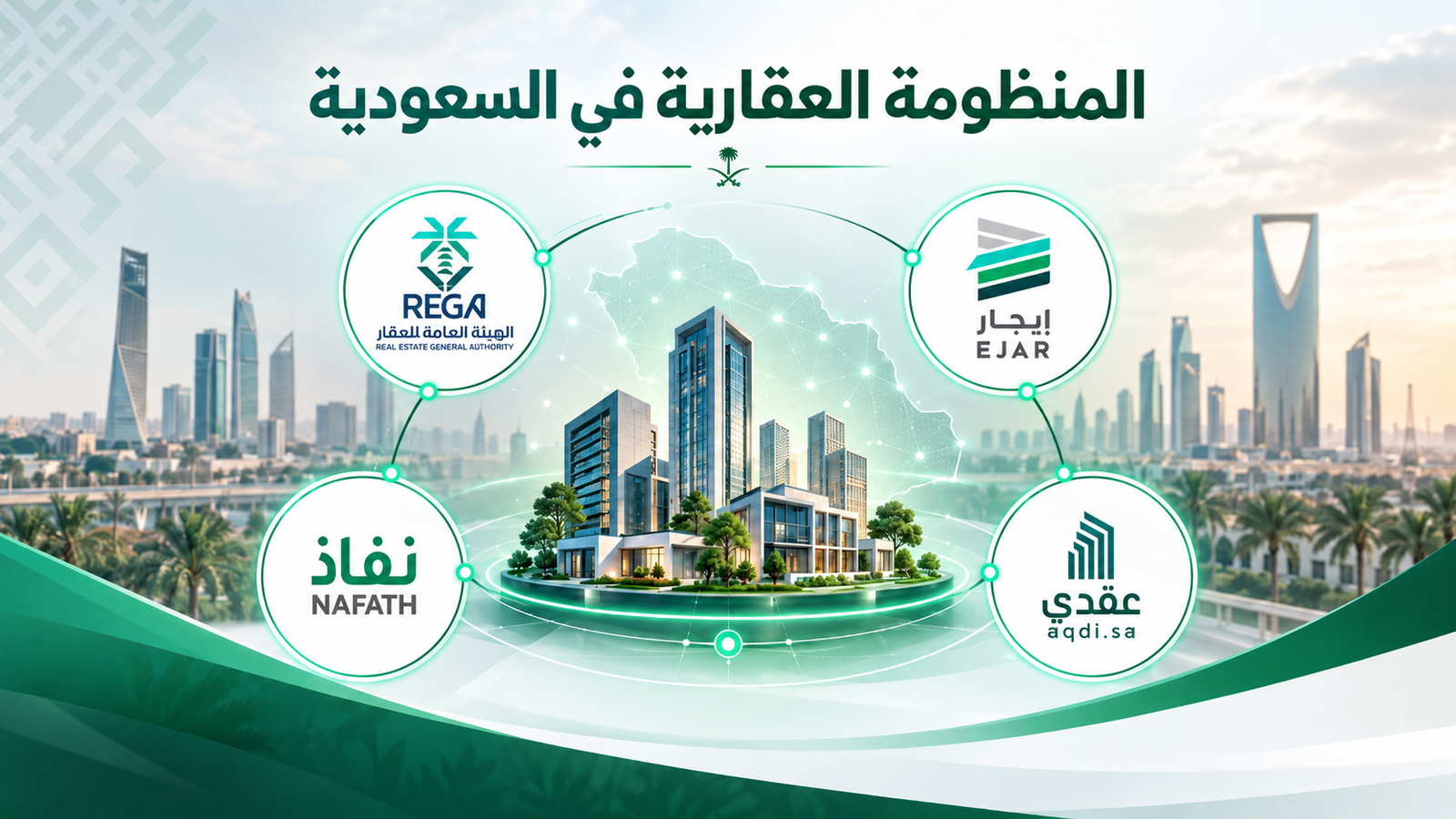
A large number of sectors in Saudi Arabia are now tied to government digital systems — such as the Ejar network for real estate or the Qiwa platform for labor. This means any system serving these sectors must be built with that compliance in mind from the design stage, not bolted on afterward.
A system that works fine with a hundred users can collapse at ten thousand if its technical architecture wasn't built to handle growth from day one. This is exactly what separates a project that was merely "delivered" from a product that was "built to last."
Any system handling user data or financial information needs clear protection standards — encryption, precise access permissions, audit logs — especially as sensitive digital systems grow across the real estate and financial sectors.
Before signing with any company, it's worth verifying the following:
Real, working projects: Not just design mockups — actual products you can visit and try yourself.
A complete team: Covering business analysis, UX design, frontend and backend development, and QA — not a single freelancer covering every role.
Technical architecture and stack: Does the company use modern, maintainable, scalable technologies (like Next.js, Laravel, and Flutter), or outdated solutions that are hard to build on later?
Post-launch support: Does the relationship end at delivery, or does the team continue to follow up and develop the product?
Transparency on cost and timeline: A professional company explains what actually determines the price instead of quoting a number with no detail behind it.
SubCode works with a complete team covering frontend, backend, and dashboard development, using modern technologies such as Next.js and React for frontends, Laravel and Node.js for backend systems, and Flutter for cross-platform mobile apps. The company has delivered projects for clients in Saudi Arabia, Egypt, Turkey, the UAE, and Qatar, giving it firsthand insight into how requirements differ across markets.
The clearest example of this work is Aqdi, an electronic rental-contract documentation platform certified by the Ejar network and the General Real Estate Authority in Saudi Arabia. It was built to serve three different parties at once — the owner, the tenant, and the broker — so a contract can be completed electronically in minutes instead of moving between offices. The platform has now surpassed one million active users, making it a practical example of the team's ability to build a product that can handle real growth, not just a proof of concept.
SubCode also worked on Al-Suqoor Real Estate, a listing-verification system built to ensure the reliability of both advertisers and properties, with a dedicated dashboard that lets the broker team track each property from the moment it's listed through to closing the deal.
There's no fixed number that applies to every project. Cost depends on several key factors:
The number of features required, such as booking, online payment, notifications, and branch management.
Whether a mobile app is needed alongside the website, and whether it's needed on one platform or both.
The number of external integrations, such as payment gateways, government systems, or messaging services.
Dashboard complexity, in terms of the number of different roles and permissions.
The post-launch support and maintenance plan.
The best way to get an accurate estimate is to define the project's scope clearly first, then request a quote based on that specific scope — not on the project's name alone.
Criterion | Website | Mobile App |
|---|
Access | Directly through the browser, and captures Google search traffic | Requires prior download and installation |
Best suited for | Introducing the business, or infrequent interaction | Repeated use (bookings, subscriptions, status tracking) |
Cost and maintenance | Relatively less complex | Higher, especially with support for both Android and iOS |
Notifications | Limited | Instant push notifications that boost user engagement |
The practical rule: if your business relies on a one-time visit or simple introduction, a strong website is enough to start with. If users will keep coming back for repeated interaction, combining a strong website with a dedicated app is the better choice long-term.
Define your goal clearly before starting any technical discussion — vague specs produce vague projects.
Review the company's actual past work, and confirm these are products that genuinely work, not just design pitches.
Put every detail in a clear contract, covering scope, timeline, and what happens after delivery.
Follow the project's progress regularly instead of waiting for a single final delivery.
Test the system before the actual launch, across different devices and use cases.
Choosing a software and web development company in Saudi Arabia isn't purely a technical decision — it's a strategic one that affects your project's ability to compete and grow. The real difference between companies doesn't show up in marketing pitches; it shows up in products that actually work and can serve thousands of users without breaking down.
If you have an app or platform idea, or an existing system that needs development, the SubCode team is ready to listen to your needs and outline the right solution, based on real experience building digital products that serve the Saudi, Egyptian, and Gulf markets.
Do you build custom platforms in addition to websites and apps?
Yes, from simple informational websites to multi-party custom platforms, such as documentation systems and property-management platforms.
Do you account for Saudi regulatory requirements like the Ejar network?
Yes, this is a core part of the design phase for any project serving a regulated sector, not something added after launch.
How long does a full project take to implement?
It varies depending on the number of features and integrations required. We always recommend starting with a basic MVP version, then scaling gradually based on real usage.
Do you provide support after launch?
Yes, support and updates are a core part of how we work, not a separate service requested later.